

Blue Planet III episode 5: Pea-sized octopuses ride jellyfish in The Deep
A "flying spaghetti monster", corals older than the Pyramids and a camera built to film robotsBlue Planet III plunges into the last great frontier on Earth in episode five, The Deep, and it stars an octopus no bigger than a pea.
Narrated by Sir David Attenborough, tonight’s episode explores deep coral reefs, underwater mountains and hydrothermal vents, revealing creatures and entire ecosystems that have never been seen by human eyes before.
The tiny octopus that rides jellyfish
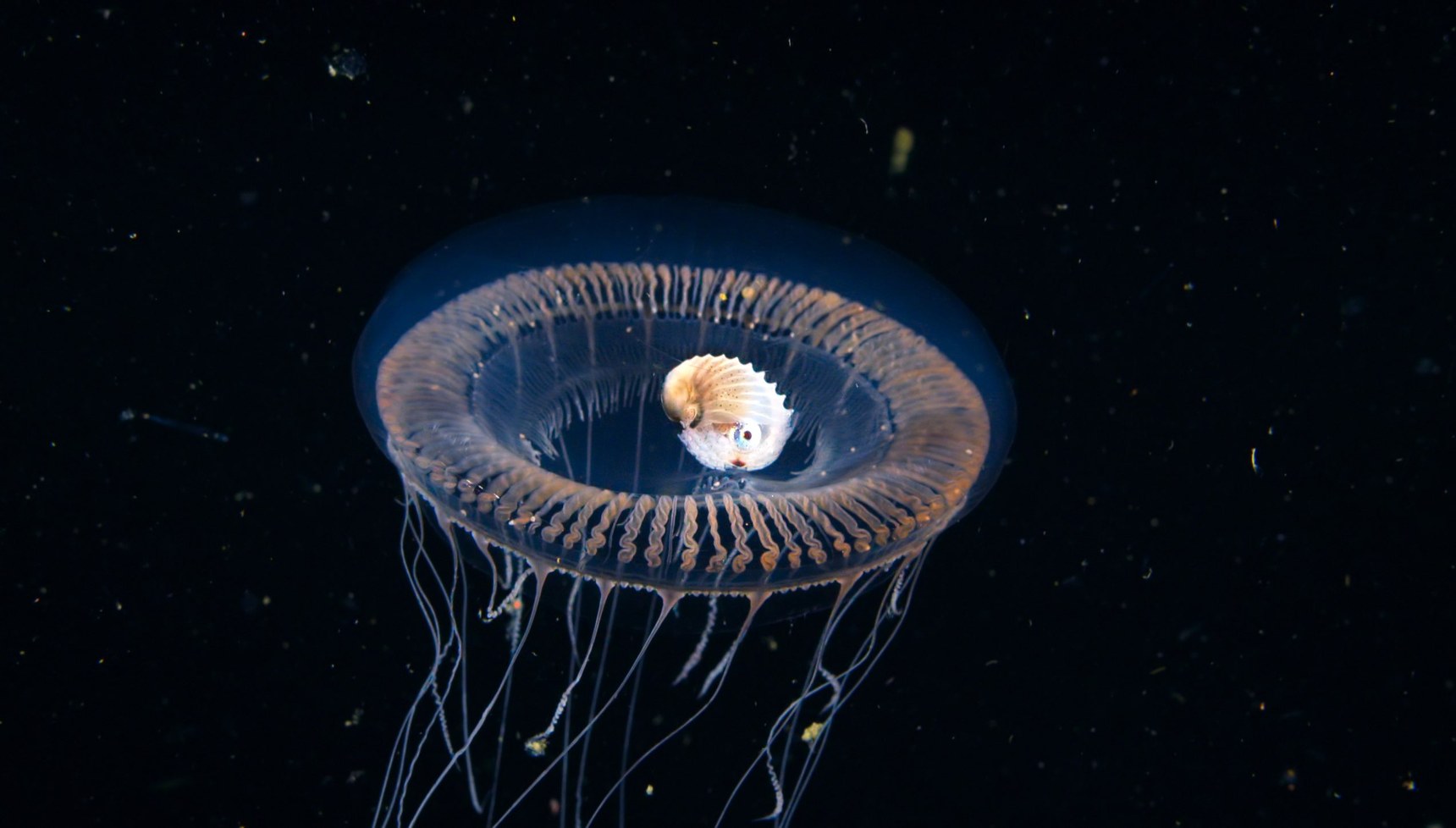
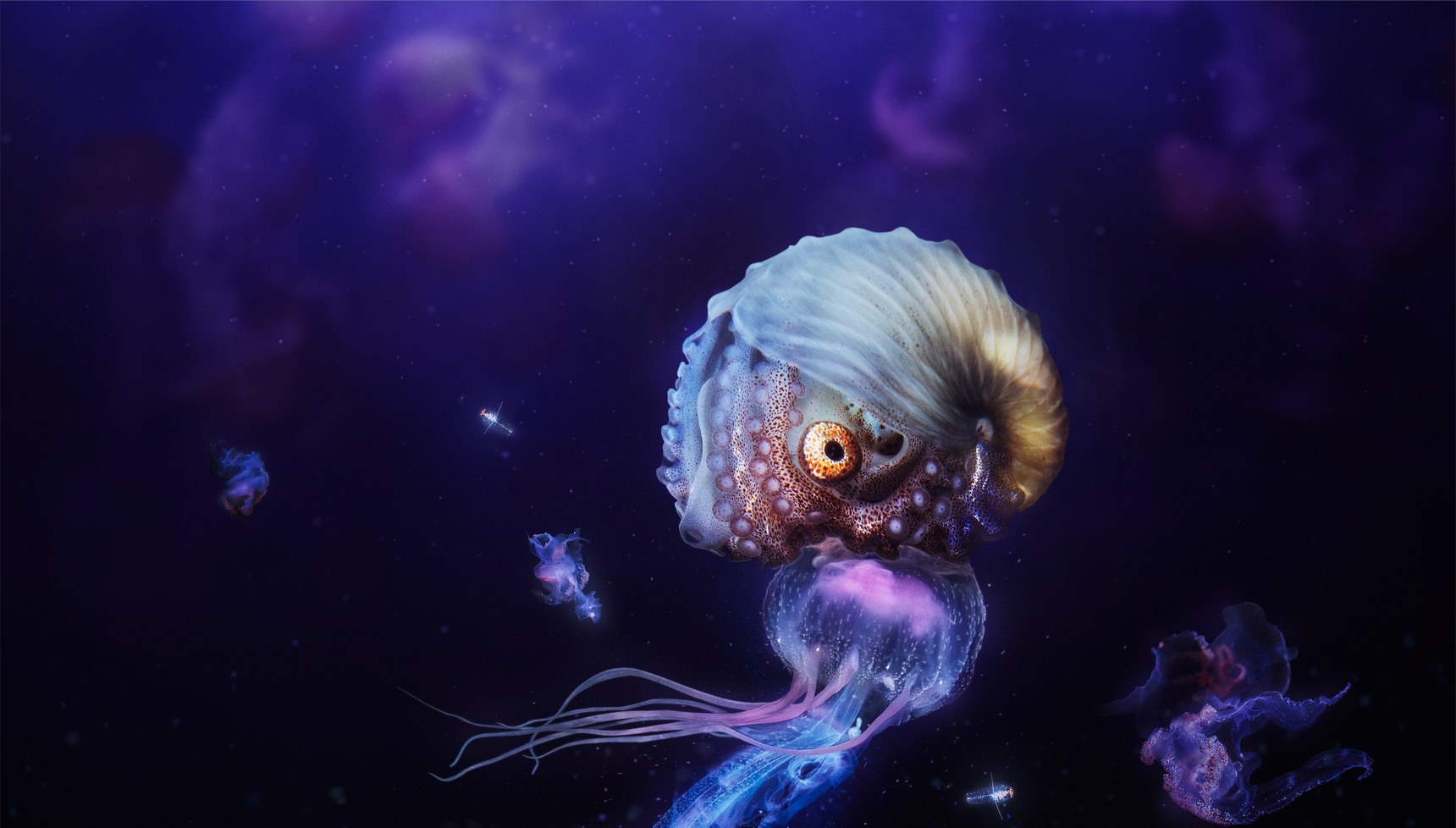
The standout moment belongs to the argonaut, the only octopus that can grow its own shell. It spends its whole life in the open ocean, and to survive, it rides on the backs of jellyfish.
Producer Eva Spielvogel admits she didn’t know argonauts existed until she started work on the series.
“It’s this beautiful little animal with big, adorable eyes inside a little shell – it looks like a Pixar character,” she said.
The jellyfish does most of the swimming, and its stinging tentacles keep predators at bay. Even better, the team filmed the argonauts steering.
“When you see these octopus on this jellyfish, it’s like an underwater rodeo. They’re literally just riding this jellyfish through the open ocean,” she said.
The sequence took the underwater camera operator two years to capture. It’s part of the Diel Vertical Migration, when trillions of animals rise from the depths into shallower water every night, in every ocean on the planet.
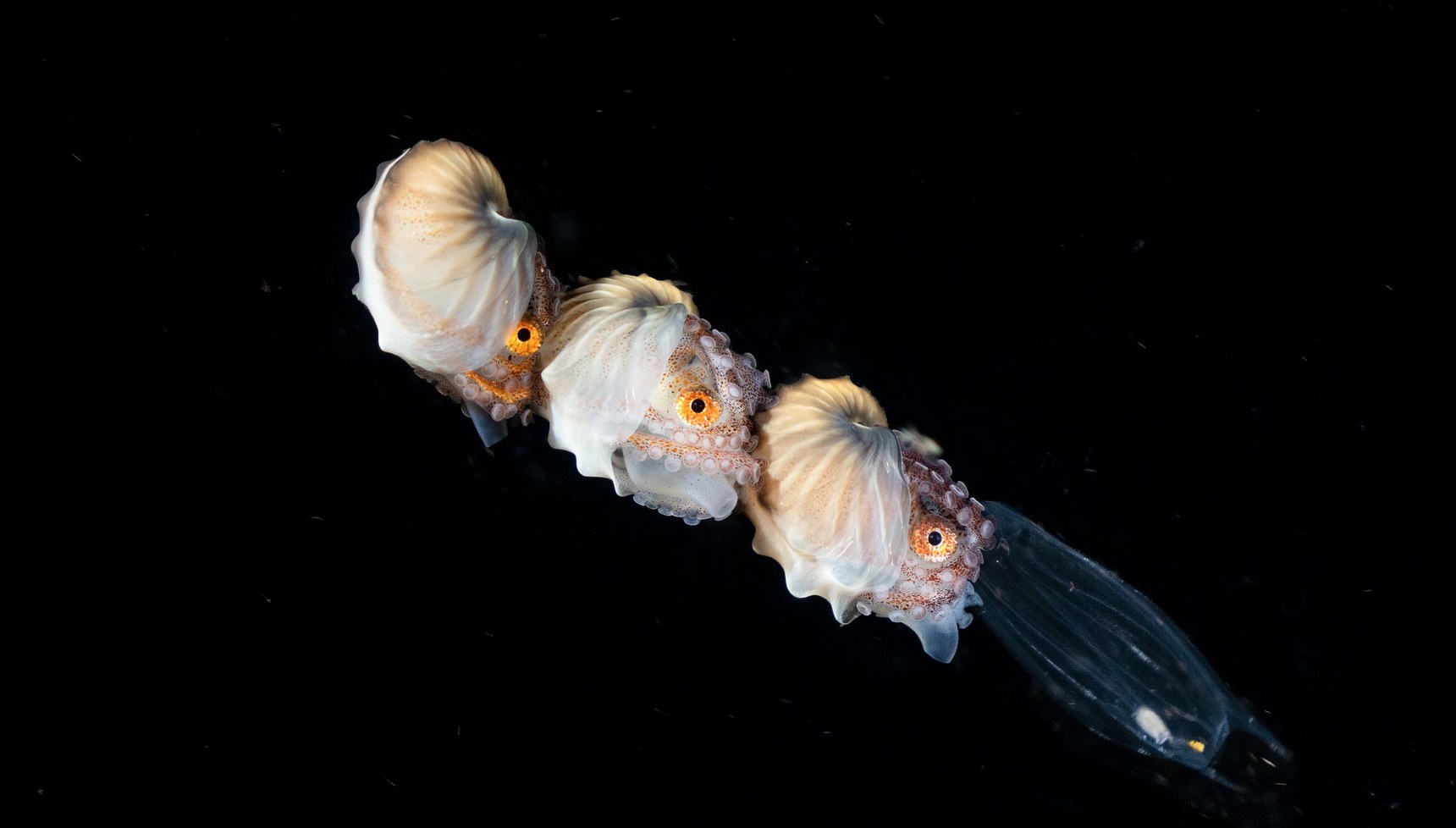
An octopus on a chocolate wrapper
Not every ride is a jellyfish. The team also filmed an argonaut clinging to a plastic chocolate wrapper, and camera operator Mike Bartick often saw them riding on plastic in the Philippines.
“Sitting on the back of a plastic won’t really get them anywhere,” Eva said. “In keeping with Blue Planet II, we wanted to continue to make people aware about the plastic problem. It hasn’t got better, unfortunately it seems to be getting worse.”
What else is in Blue Planet III episode 5?
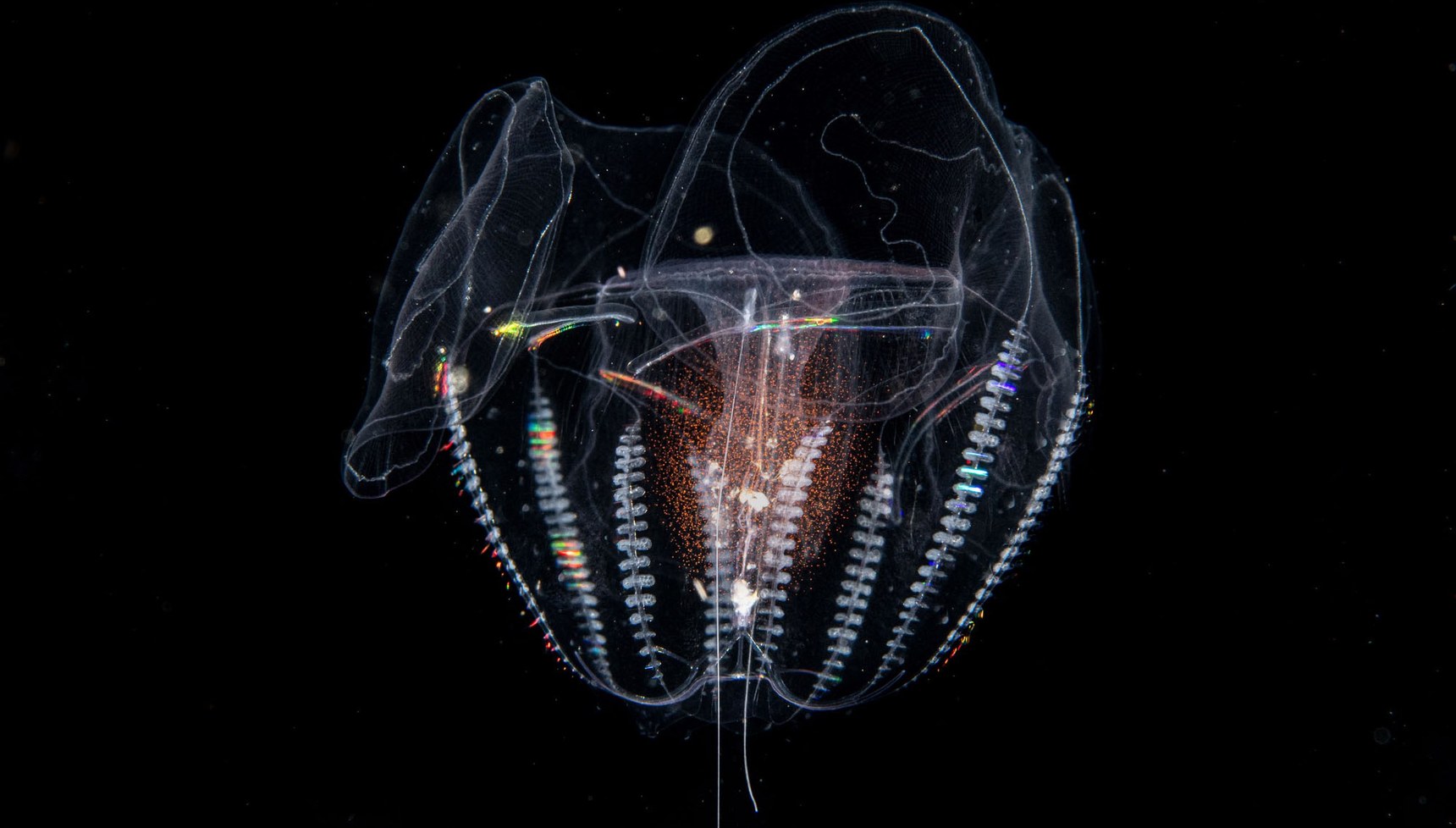
Meet the flying spaghetti monster. It’s a siphonophore, made up of thousands of tiny animals working together as one body, with “noodley” tentacles that Eva says “look like ramen”. It was thought to be incredibly rare, but the team filmed it five times on one expedition.
On the seafloor, ancient coral reefs thrive in total darkness. The team filmed a deep-sea coral thought to be 7,000 years old, older than the Pyramids.
Methane seeps create unexpected oases of life, and bioluminescent hunters communicate in flashes of living light.
Finally, aboard the legendary submersible Alvin, we descend to hydrothermal vents where towering chimneys support whole communities that live without sunlight.
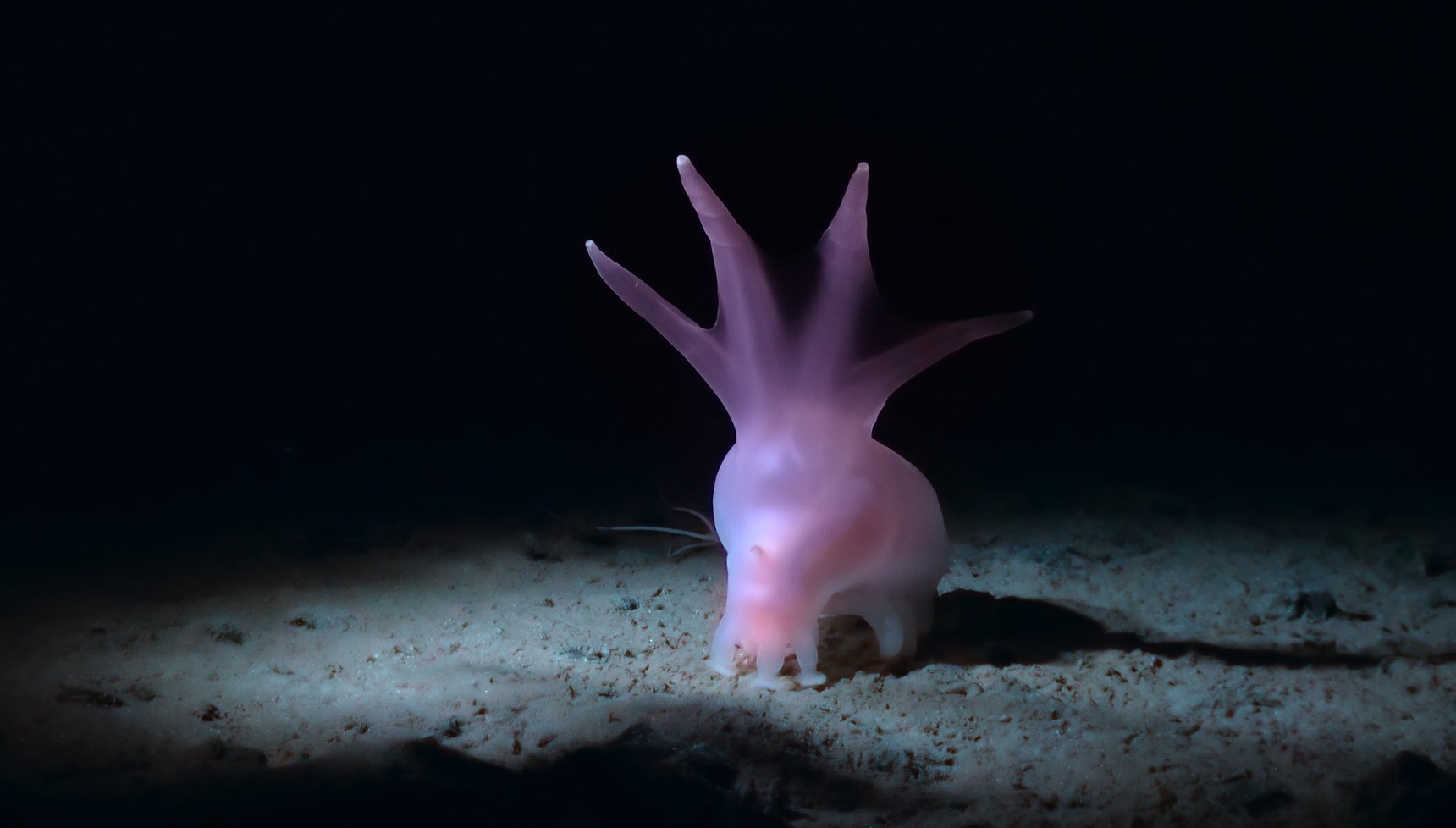
How the team filmed the deep
The Deep took four years of planning, 504 days of filming and 29 shoots in 16 countries. One cameraman crossed the Drake Passage 14 times.
Remotely operated vehicles took cameras down to 4,000 metres, and the team built what is believed to be the first cinematic deep-sea camera rated to 6,000 metres.
They even built a camera to film the robots. Nicknamed “Little Charlie”, it sat on the seafloor or in an ROV’s robotic arm to capture the submersibles at work.
The series is also the first time DeepPIV technology has been used on television. It lets scientists see delicate creatures such as comb jellies in their natural home, without bringing them to the surface, where their bodies get damaged.
‘We know more about the surface of our moon’
The deep ocean is the largest habitat on Earth, but we’ve seen only around 0.001% of it with our own eyes.
“Supposedly we know more about the surface of our moon than we do of our own deep ocean,” Eva said.
“It’s the last place on our planet to be explored, and what’s really exciting about this episode is that there are these explorers, scientists, submersible pilots – a cast of incredible people that are entering this world for the first time in human history.”
Read more: Blue Planet III episode 4: Sea lion hunts penguins on land
How many episodes of Blue Planet III are there?
Blue Planet III has six episodes, airing every Sunday on BBC One. After The Deep, the final episode, Future Seas, airs on Sunday, December 6.
Blue Planet III continues on Sunday, November 29, at 8pm on BBC One and iPlayer.
This article was produced with the assistance of AI technology to synthesise source reporting and structured data. It has been reviewed, edited, and fact-checked by our human editorial team before publication.