

The Accused: Beyond Reasonable Doubt's Eddie Gilfoyle insists 'I did not kill my wife' in gripping C4 documentary
Eddie was jailed for life after being convicted of murder in 1992The Accused: Beyond Reasonable Doubt will tonight see Eddie Gilfoyle make another desperate attempt to prove his innocence after being convicted of murdering his pregnant wife.
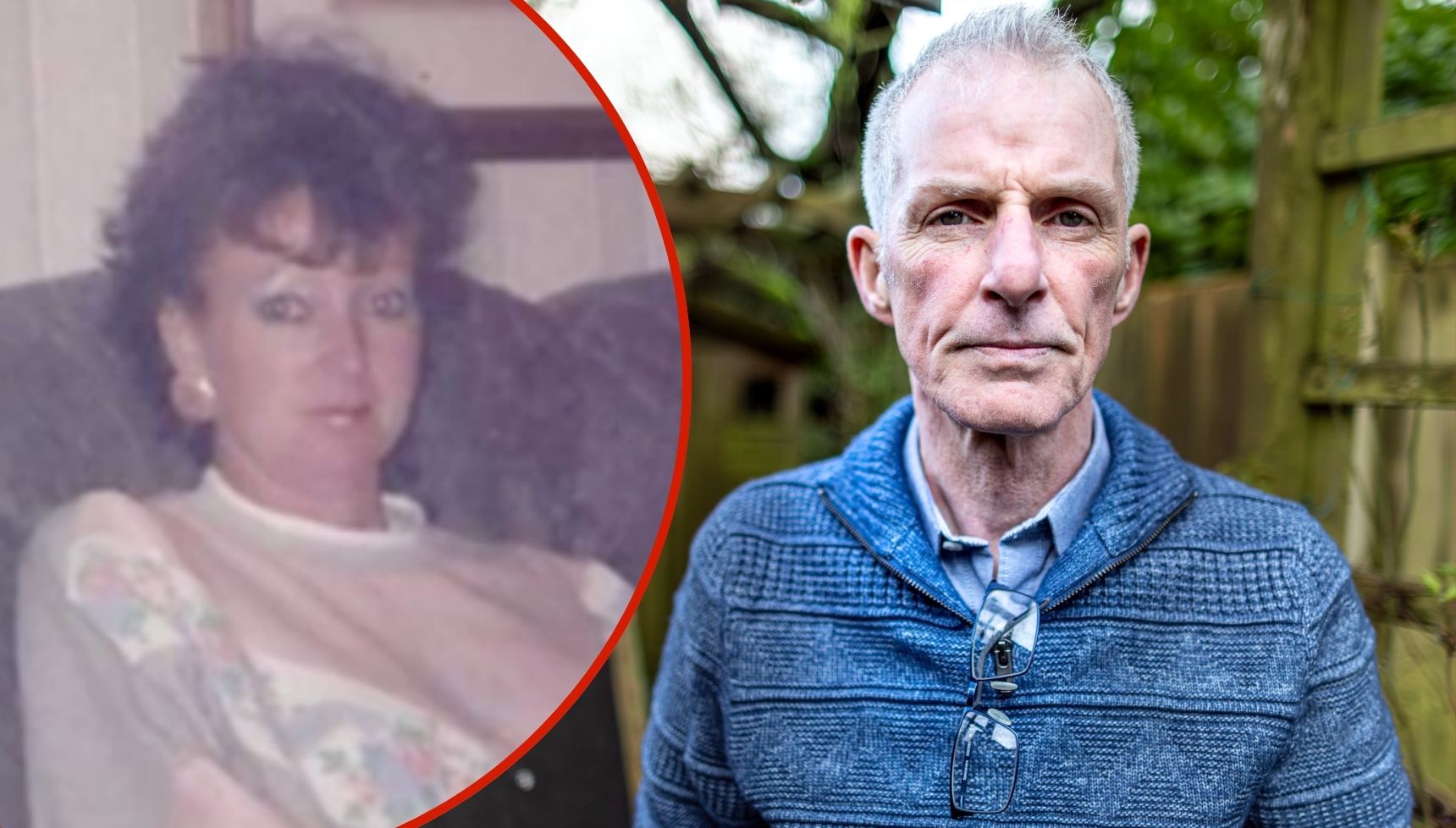
Eddie, now in his 60s, was jailed for life in 1993 following the death of Paula.
His wife had been found hanged in the couple’s garage. She was eight-and-a-half months pregnant at the time.

But despite there being no forensic evidence, police decided Eddie had ‘convinced’ Paula, 32, to take her own life.
The prosecution case relied mainly on the belief that “bubbly” Paula would never have died from suicide – especially as she was pregnant.
In gripping scenes that will play out in tonight’s instalment of the Channel 4 documentary series, Eddie is asked: “Did you kill your wife?”
He replies: “I did not kill my wife. My wife took her own life.”
Eddie adds: “I want to clear my name. That’s what I’m living for.”
The Accused: Beyond Reasonable Doubt’s Eddie Gilfoyle case
The latest episode begins in 1992 in Upton, Wirral. Eddie has returned to the house he owns with Paula to find an alarming, hand-written note.
There is no trace of Paula so he races to get his brother-in-law, Paul Craddick, to help with the search.
Back at the house, Paul – who went on to marry Eddie’s sister – then makes the grim discovery in the garage. He opens the door to find Paula suspended from the ceiling.
Paul tells the cameras that Eddie didn’t see Paula’s body. He does recall how his friend was “wailing and wailing”, however.
Initially, the police conclude that she has taken her own life. But, within days, they decide Paula must have been murdered – and Eddie is their prime suspect.
Yet Paul, a retired policeman, recalls: “[The garage] was not treated like a crime scene. And the consequences of that can be catastrophic.”
Eddie suddenly found himself front page news over a crime he says he didn’t commit.
Looking drawn and exhausted, Eddie himself recalls in the documentary how “rumours” began swirling about town.
“Someone threw a noose at the window of my mum and dad’s house and that’s what flipped me over the top,” he adds. “It all got too much and I ended up in a psychiatric hospital.”
While in hospital, Eddie was rearrested and charged with Paula’s murder.
He remembers: “It was a nightmare, upon nightmare, upon nightmare.
“I’d never been in a prison. I ended up going into a room where they held all the sex offenders. I was wondering what the hell I have done to deserve all this [bleep].
“It was the worst time of my life and I hated every single second of it.”

Police reconstruction video
Viewers of The Accused: Beyond Reasonable Doubt will hear from Professor David Canter, an Applied Social Psychologist. Prof Canter was asked to give his opinion to police following Paula’s death.
Reading back his report from 1992, he says: “I consider that it is very unlikely that Paul Gilfoyle wrote the suicide letter with the intention of taking her life. Or that she moved the ladders and put the rope around her neck with the intention of committing suicide.”
The following year, Eddie appeared before a jury.
The prosecution case appeared to be based on the idea that a pregnant woman would never take their own life. 17 witnesses gave evidence saying Paula was a “bubbly” and “happy” person.
A police reconstruction video was also played to the jury. It showed a pregnant policewoman trying – and failing – to tie a rope around a garage beam while stood on a ladder.
But Paul says: “Whether this policewoman can or can’t do it, it doesn’t answer the question about whether Paula could do it.”
Eddie recalls how his legal team did not provide a single defence witness. Paul explains: “They were confident a lack of prosecution tying Eddie to it was enough.”
But it wasn’t. Eddie was found guilty and sentenced to life in prison, with a minimum term of 17 years. He was taken to Wakefield Prison – aka Monster Mansion – and describes it as “hell”.
Failed appeals and expert U-turn
Eddie and his legal backers will explain how they made two attempts to quash his murder conviction at the Court of Appeal. Both times, their cases were rejected.
Among the fresh evidence was a U-turn from Professor David Canter. A wealth of research into perinatal mental health has been conducted since 1992 and he has now changed his opinion.
Prof Canter admits: “You feel under a lot of pressure to offer an informed opinion. I was guilty of leaning towards the general view of a pregnant woman killing herself as unlikely.
“There’s no evidence for it. It was just an opinion. What I’ve learned about suicide – and suicide in pregnant women – I didn’t have that information at the time.”
David now believes the suicide note was in fact written by Paula.

Lancashire Police went on to conduct its own investigation into the case. It found no evidence a crime had been committed.
Paula’s old diaries and letters have also been unearthed. At the beginning of her pregnancy, she in one: “Unfortunately, the baby has come when I’m at the lowest ever in my life.”
But none of it has been enough and Eddie – who was freed on licence in 2010 after 17 years inside – is still fighting to clear his name.
“I want my life given back,” he says.
Paula’s family react to The Accused: Beyond Reasonable Doubt
Merseyside Police said in a statement to C4 that it stands by the Criminal Cases Review Commission’s decision that the case would not be returning to the Court of Appeal again.
Paula’s family, meanwhile, said: “This case underwent a thorough legal process, resulting in a Crown Court conviction, and all subsequent appeals were rejected.
“To frame this case as a miscarriage of justice shifts the narrative away from the perpetrator and back onto the victim, a pregnant woman who has no voice to defend herself.”